Blog
Business Electricity Bill Breakdown UK 2025-2026

If you run a business in the UK, you're likely paying around 23.5p per kWh for electricity, but only about 36p in every pound actually pays for the energy itself. The remaining 64p is made up of network charges, government levies, taxes, and supplier costs.
Here's the full breakdown, based on data from DESNZ and Ofgem.
The Full Breakdown
| Component | % of Bill | p/kWh |
|---|---|---|
| Wholesale Energy | 36% | 8.45p |
| DUoS (Distribution Network) | 15% | 3.52p |
| TNUoS (Transmission Network) | 5% | 1.17p |
| Renewables Obligation (RO) | 15% | 3.52p |
| BSUoS (Balancing) | 6% | 1.41p |
| Contracts for Difference (CfD) | 6% | 1.41p |
| Feed-in Tariffs (FiT) | 4% | 0.94p |
| Capacity Market (CM) | 4% | 0.94p |
| Climate Change Levy (CCL) | 3% | 0.78p |
| Losses & Other | 3% | 0.70p |
| Supplier Margin | 3% | 0.70p |
Percentages are of the total bill excluding VAT. Most businesses then pay an additional 20% VAT on top.
Wholesale Energy (36%)
This is the cost of electricity on the wholesale market: what generators charge for producing power. It's the single largest component and is heavily influenced by gas prices, since gas-fired power stations often set the marginal price. Despite being the biggest chunk, it's still only about a third of your total bill.
Network Charges (20%)
These cover the cost of physically moving electricity to your premises:
-
DUoS (Distribution Use of System), 15%: Pays for the local distribution network. Varies by region and time of use, with 14 distribution network operators across Great Britain. Peak hours (red band, typically 4-7pm weekdays) attract significantly higher charges than off-peak (green band, overnight).
-
TNUoS (Transmission Network Use of System), 5%: Funds the high-voltage national transmission grid. These charges are set to rise sharply. Fixed charges for a typical Low Voltage site are projected to increase from ~£2,500/year in 2025-26 to over £5,300 in 2026-27 due to grid investment for net zero.
Policy & Environmental Costs (29%)
Almost a third of your bill funds government energy and environmental policies:
-
Renewables Obligation (RO), 15%: The largest policy cost. Requires suppliers to source electricity from renewable generators or pay a buy-out price. Supports older large-scale wind and solar projects.
-
Contracts for Difference (CfD), 6%: Supports newer renewable and nuclear projects. Generators receive a guaranteed "strike price". When wholesale prices are high, CfDs can actually reduce costs as generators pay back the difference.
-
Feed-in Tariffs (FiT), 4%: Supports small-scale renewables like rooftop solar. The scheme closed to new applicants in April 2019, but existing participants receive payments for up to 20 years.
-
Capacity Market (CM), 4%: Pays generators to be available during peak demand (winter weekdays, 4-7pm). These charges are set to roughly double from 2025-26 to 2026-27.
Taxes & Levies
-
Climate Change Levy (CCL), 3%: An environmental tax unique to non-domestic supplies at 0.775p/kWh for 2025-26. Some energy-intensive industries can claim reduced rates through Climate Change Agreements.
-
VAT, 20%: Applied on top of everything above. Unlike domestic customers who pay just 5%, most businesses pay the full standard rate. Some qualifying charities and very low usage businesses may be eligible for the reduced rate.
Other Costs (6%)
- Distribution & transmission losses (3%): Energy physically lost as heat during transport across networks.
- Supplier margin & operating costs (3%): Metering, billing, customer service, and the supplier's profit.
- Nuclear RAB levy: From November 2025, a new charge of approximately £3.85/MWh funds Sizewell C construction.
How Business Bills Differ from Domestic
If you're used to reading domestic energy news, business bills work quite differently:
- 20% VAT vs 5% for households
- Climate Change Levy: domestic customers don't pay this at all
- No price cap: Ofgem's cap only protects domestic customers
- Half-hourly metering: larger businesses have time-of-use charges across red, amber, and green bands
- Capacity charges: businesses pay for their agreed supply capacity (kVA); exceeding it incurs excess charges
- Pass-through contracts: many business contracts itemise every third-party charge rather than bundling them into a single rate
Average Rates by Business Size
Prices vary dramatically depending on how much electricity you use. Based on the latest DESNZ data (Q3 2025):
| Business Size | Average Rate (p/kWh) |
|---|---|
| Very Small | 41.15p |
| Small | 28.27p |
| Small/Medium | 27.81p |
| Medium | 24.65p |
| Large | 23.01p |
| Very Large | 20.98p |
| Extra Large | 20.49p |
Prices include CCL but exclude VAT.
Very small businesses can pay nearly double what large businesses pay per kWh, making it especially important for SMEs to understand their bill and look for savings.
What Can You Do About It?
While you can't avoid most of these charges, there are ways to reduce their impact:
- Shift consumption to off-peak hours to reduce DUoS red band charges
- Review your agreed capacity (kVA): you may be paying for more than you need, or incurring excess charges
- Check your CCL eligibility: if you're in an energy-intensive industry, a Climate Change Agreement could cut your CCL significantly
- Consider pass-through contracts for transparency on exactly what you're paying
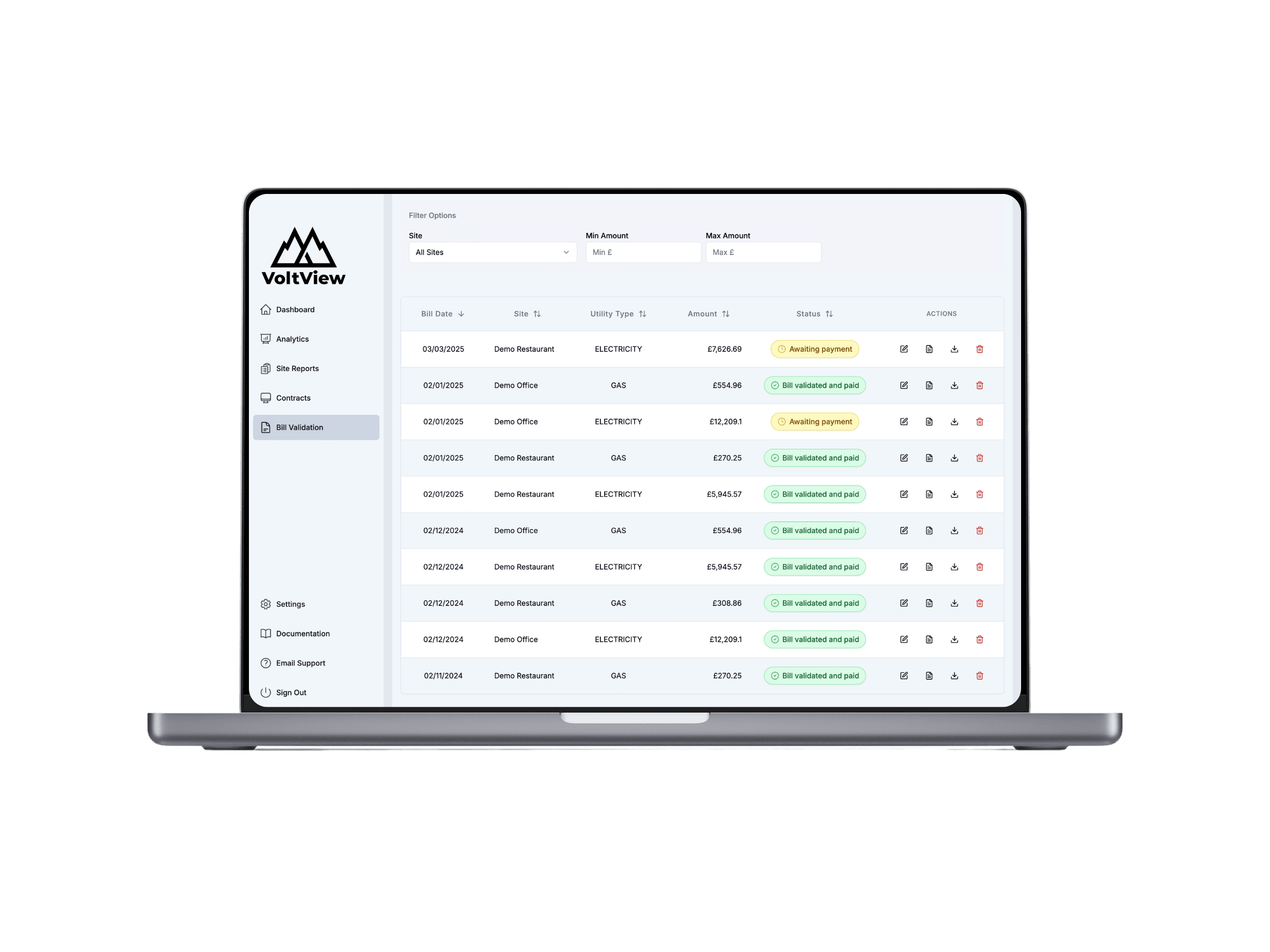
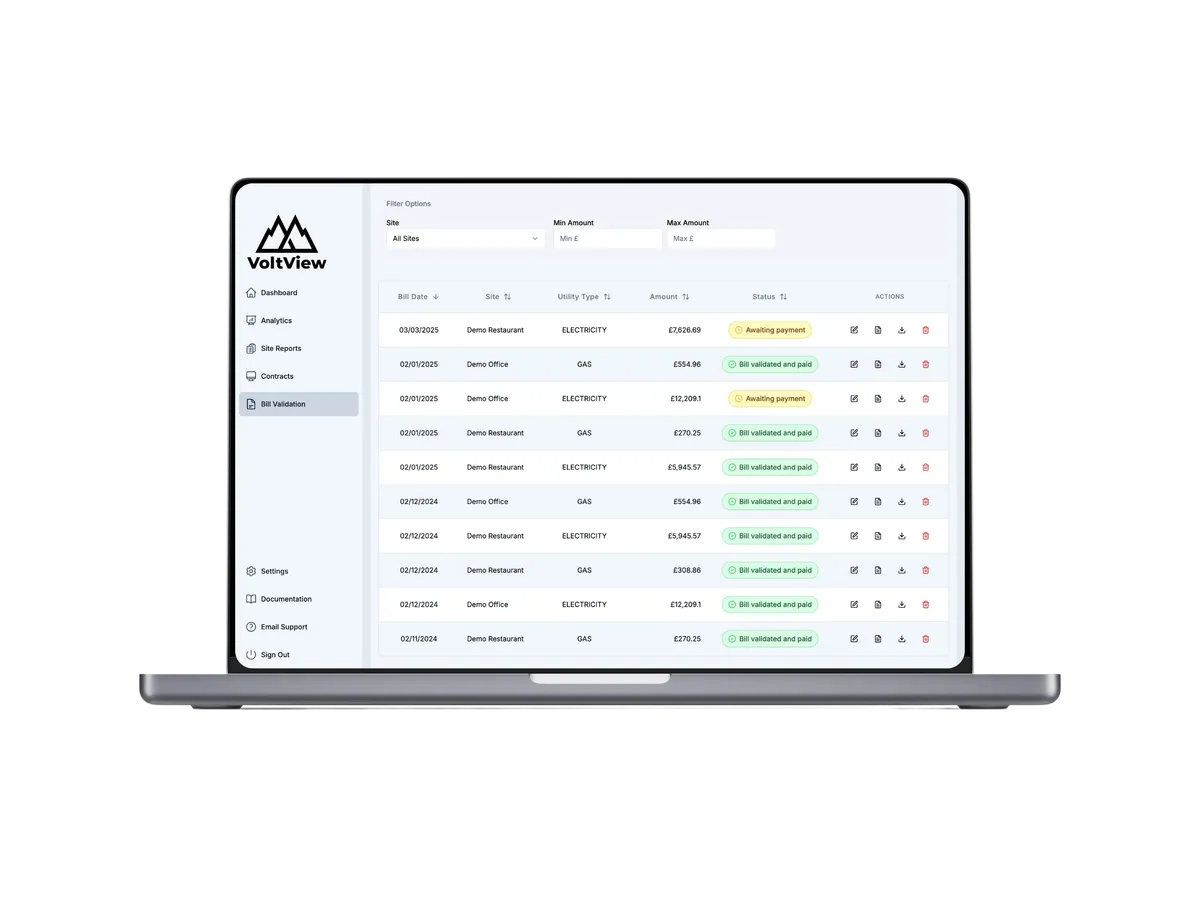
- Monitor for billing errors: with this many charge components, mistakes are common
Understanding your bill is the first step to controlling your energy costs. For a full interactive breakdown, visit our Bill Breakdown tool.
This article was inspired by the excellent work of Ben James at electricitybills.uk, who built a brilliant interactive breakdown of domestic electricity bills. We wanted to bring the same level of transparency to the business side, where bills are more complex and even less understood. If you're interested in the domestic breakdown, definitely check out Ben's site.
Data sources: DESNZ Quarterly Energy Prices Q3 2025, electricitycosts.org.uk, Energy UK, HMRC CCL Rates.
 Download on the App Store